NEWS
Low-Carbon Precast Concrete: Cutting Carbon by 20% with the Environment Agency and RPC Contracts

The brief: Reducing embodied carbon in precast concrete blocks
Material Evolution partnered with the Environment Agency and RPC Contracts, one of the UK’s leading precast concrete manufacturers, to trial a MevoXL admixture as part of the Environment Agency’s Decarbonisation Technology Accelerator. The trial set out to show that concrete producers could cut embodied carbon immediately, without affecting turnaround times or requiring any significant changes to existing processes.
The trial focused on RPC’s Dycel 150 interlocking precast blocks, used in a range of applications in the water sector including reservoir spillways. Concrete accounts for up to 25% of the Environment Agency’s embodied carbon footprint, making low-carbon precast concrete a priority area in its decarbonisation efforts, with precast blocks of this kind produced at scale across its infrastructure programme.
What is embodied carbon in concrete?
Embodied carbon in concrete is the total CO2 emitted in producing and transporting its raw materials, primarily from manufacturing ordinary Portland cement (OPC), which is responsible for the vast majority of concrete’s carbon footprint. Reducing embodied carbon means replacing OPC with lower-carbon materials, such as supplementary cementitious materials (SCMs) like GGBS and pulverised fly ash (PFA), without compromising strength or durability.
Key results from this trial: low-carbon precast concrete results
- PFA (pulverised fly ash) content was more than doubled, from 14% in the control mix to 30% with MevoXL, per customer request
- 20% lower embodied carbon with MevoXL compared to the control mix
- 56% increase in strength compared to specification (78N vs. 50N)
- Material costs were unchanged
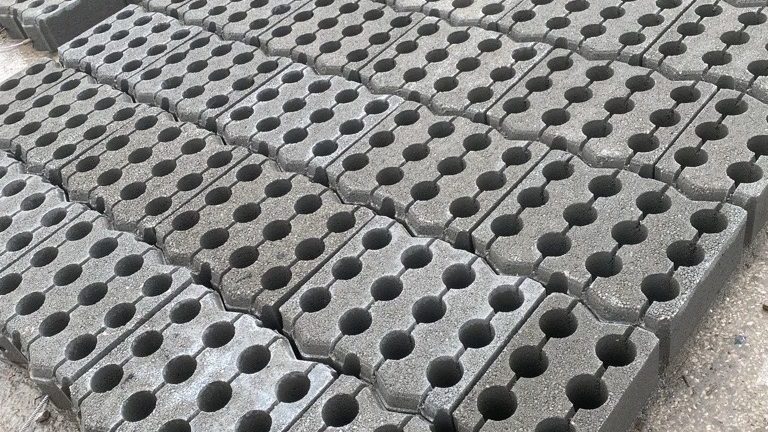
Our approach: Boosting PFA while maintaining strength
Working together, Material Evolution, the Environment Agency and RPC took RPC’s existing Dycel mix design and adapted it in the lab to create a tailored MevoXL admixture. Trial blocks were then manufactured, tested and crushed to determine strength ahead of real-world deployment on site.
Using MevoXL unlocked a technical solution for RPC that they had not previously been able to achieve: more than doubling the proportion of PFA in the mix, from 14% to 30%, without compromising performance. PFA is a well-proven low-carbon supplementary cementitious material (SCM) and a byproduct of the coal industry. With an estimated 100 million tonnes of legacy fly ash stockpiled in the UK, it’s a readily available, local replacement for cement, and increasing its use directly reduced the embodied carbon of the finished blocks.
Watch a behind-the-scenes video of the trial here.
Read the press release here.
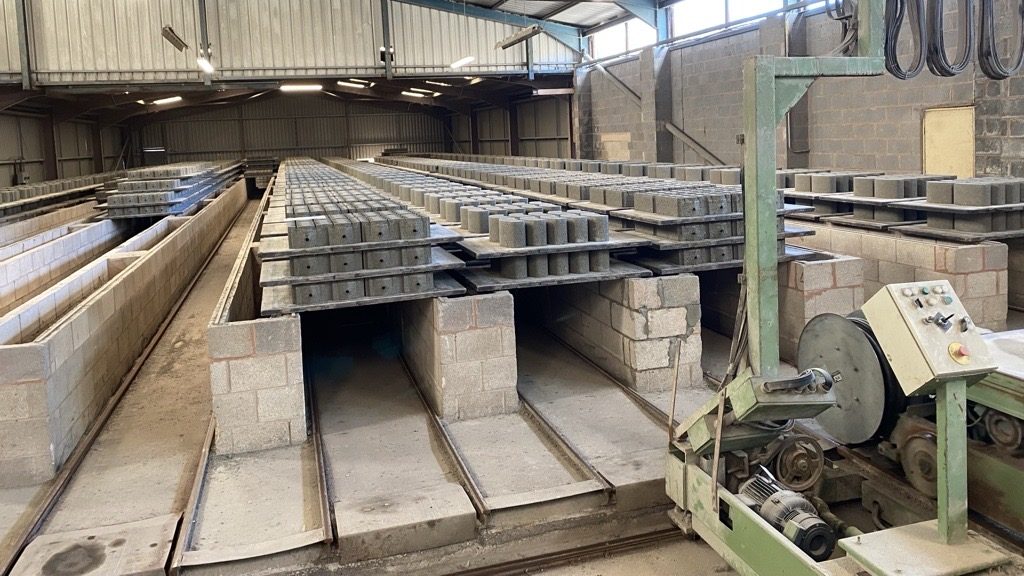
The technology behind MevoXL: a low-carbon cement admixture
MevoXL is a low-carbon cement admixture that enables cement producers and precast manufacturers to replace up to 95% of ordinary Portland cement (OPC) with low-carbon materials like GGBS and PFA, while maintaining performance and turnaround times. It’s suited to both precast and ready-mix concrete applications, and can cut carbon by up to 80%. See our full product page for technical specifications.
Higher SCM replacement rates have traditionally been limited by early strength development, which is where MevoXL does its work: it solves the early strength challenges that usually cap how much OPC can be swapped out, allowing manufacturers to safely push replacement rates much higher than they otherwise could. In RPC’s trial, that meant increasing PFA content from 14% to 30% while still exceeding the strength specification by 56%.
Because MevoXL is designed to work within manufacturers’ existing mix designs and plant, adoption requires almost no change to established processes, cost base, or production timelines — removing much of the risk that typically comes with switching to a new material.
The end result: 20% less embodied carbon, higher strength
The trial demonstrates that cutting embodied carbon in precast concrete can be simple and cost-neutral, using materials manufacturers already know how to handle. For the Environment Agency, where concrete makes up such a significant share of embodied carbon, a solution that requires almost no change to existing processes represents a genuinely scalable route to decarbonising its infrastructure programme.
Andy Powell, Technical Assurance Lead, Environment Agency said: “Cutting carbon across all of our infrastructure projects is one of our biggest priorities as we move toward net zero. This simple change in formulation with RPC and Material Evolution is exactly the kind of solution we are excited about, one that delivers real benefits without compromise. Our trial not only cut carbon, but led to greater block strength, and with no impact on timelines or a rise in material cost, it’s a genuine no-brainer. We’re looking forward to taking what we’ve learned here into future projects together.”
Tony Maxwell, Managing Director, RPC Contracts added: “During this trial what stood out the most was how little we had to change with MevoXL. The process stayed the same, the material costs stayed the same, but the blocks came out stronger and we saved carbon in the process. That’s the kind of result that makes adopting lower-carbon materials an easy decision for us.”
St. Hilaire, Technical and Commercial Director, Material Evolution said: “This trial demonstrates that cutting embodied carbon can be simple and cost-neutral with respect to the materials. While ultimately we encourage the industry to move toward novel cement alternatives, we recognise that there is low-hanging fruit that can be adopted in the near term.
“MevoXL enables concrete producers to use more of the materials they’re already familiar with, while solving the early strength challenges that usually limit high-SCM replacement mixes. This is an easy, simple switch for manufacturers like RPC, who are under pressure to answer demands from specifiers for lower-carbon materials, without hurting their margins or taking on any big risks on new materials.”
Frequently asked questions
How much does MevoXL reduce embodied carbon in precast concrete?
MevoXL delivers immediate carbon reductions of up to 80% across precast and ready-mix projects, without compromising product performance or turnaround times.
In this trial MevoXL, utilising a 30% mix of PFA, we reduced embodied carbon by 20% compared to a standard mix, while increasing strength by 56% and keeping the material cost unchanged.
Does using MevoXL require new equipment or retraining?
No. MevoXL is designed to work within a manufacturer’s existing mix design, plant and processes, so adoption requires no retooling and no change to production timelines.
What is PFA and why is it used in low-carbon concrete?
PFA (pulverised fly ash) is a supplementary cementitious material and byproduct of the coal industry. With an estimated 100 million tonnes stockpiled in the UK, it’s a proven, low-carbon, locally available replacement for cement.
Contact us today to discuss your low-carbon precast concrete solution
MevoXL offers a fast, practical route for precast and ready-mix producers to adopt lower-carbon concrete within existing standards, cost base and timelines. Read more of our low-carbon cement case studies or explore MevoCem, our ultra-low carbon cement.
Get in touch to find out how we can support your next project.